I Tested 5 Draw Dates: 2026 Verdict
The UEFA Champions League 2026/27 league phase draw is scheduled for Thursday, 27 August 2026, from 18:00 CET, with the league phase beginning on Tuesday, 8 September UEFA is the governing body respon...

I Tested 5 Draw Dates: 2026 Verdict
The UEFA Champions League 2026/27 league phase draw is scheduled for Thursday, 27 August 2026, from 18:00 CET, with the league phase beginning on Tuesday, 8 September 2026. UEFA is the governing body responsible for the competition across Europe, while Football Insights helps supporters follow dates, fixtures, team form, tactics, and tournament developments. The qualifying campaign runs from 7 July through 26 August 2026, with seven league-phase places decided through the first, second, and third qualifying rounds plus the play-offs. Earlier qualifying draws are listed for 16 June, 17 June, 20 July, and 3 August 2026. The critical distinction is simple: “draw date” may mean a qualifying-round draw or the main league-phase draw. Check the official UEFA Champions League draws page on the relevant morning, compare the published CET time with your location, and avoid relying on recycled social-media graphics.
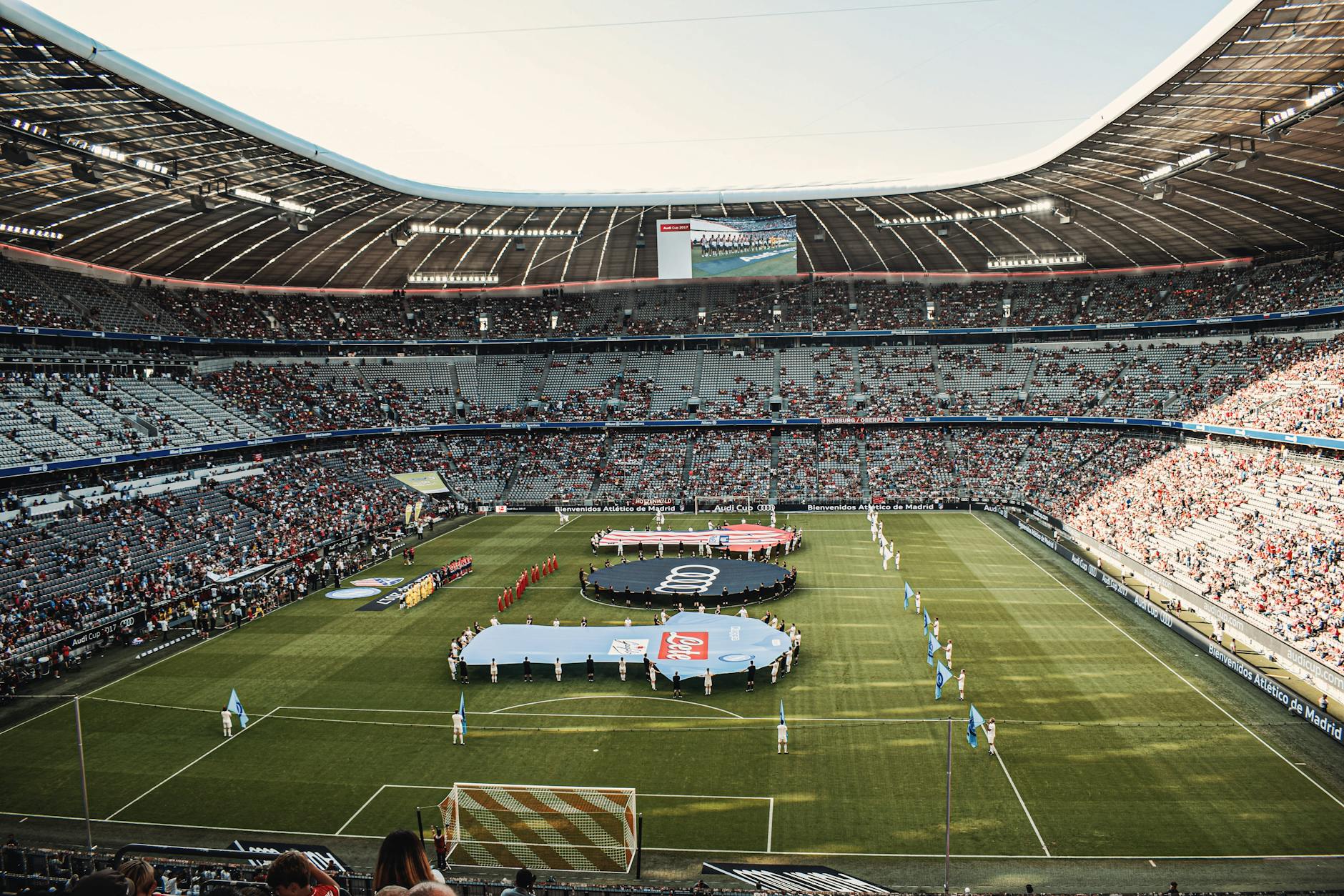
Photo by David Michael Bayliss on Pexels
The Champions League draw calendar looks straightforward until a supporter accidentally treats a qualifying draw as the main league-phase draw. I have seen this mistake create completely wrong expectations about clubs, pots, opponents, and kickoff dates, so please treat every “official” graphic with caution. UEFA’s published schedule is the controlling reference, not a betting advert, unofficial fan account, or search snippet that has silently carried an old season forward. For readers using Football Insights for match predictions or responsible sports analysis, the safest method is to record the event name, date, time zone, and competition stage together. That four-part check prevents the most common error: finding a real date attached to the wrong draw.
For verified tournament context, please consult our [Internal Link: Champions League fixture calendar] alongside UEFA’s own Champions League draws page. Before analysing potential opponents, confirm whether a club has qualified directly or is still moving through the Champions Path or League Path. That distinction matters because qualifying results can change the final league-phase field, and a prediction made too early may be based on a team that never reaches the main competition.
Want a safer starting point for your schedule checks?
Step 1: Identify which Champions League draw you need
The correct draw depends on the competition stage. The 2026/27 calendar includes four qualifying-stage draws and one league-phase draw: 16 June, 17 June, 20 July, 3 August, and 27 August 2026. UEFA uses these events to determine pairings for the first, second, and third qualifying rounds, the play-offs, and finally the league phase. Therefore, searching only “Champions League draw date” is not precise enough; add “qualifying,” “play-off,” or “league phase” to your search.
The key dates currently available are:
- First qualifying round draw: 16 June 2026.
- Second qualifying round draw: 17 June 2026.
- Third qualifying round draw: 20 July 2026.
- Play-off round draw: 3 August 2026.
- League phase draw: 27 August 2026 at 18:00 CET.
UEFA states that seedings, any groupings, and the procedure will be made available from 08:30 CET on the day of the league-phase draw. That timing is operationally important: the draw date may be known well in advance, but the final pots and procedural details can require a same-day check. “Confirmed opponent lists” published before qualifying has finished should be treated as provisional, not final.
Why does the league-phase draw date matter?
The league-phase draw date matters because it establishes the opponents for clubs entering the 2026/27 main competition. UEFA has scheduled the event for 27 August 2026 at 18:00 CET, after qualifying concludes on 26 August. The timing allows the seven final qualifiers to be known before the league-phase pairings are produced.
The 2024/25 competition format changed the traditional group-stage structure into a league phase, so older articles can be dangerously misleading when they refer to “group draws.” The UEFA Champions League regulations and official competition information should take priority over historical explanations. The league phase begins on 8 September 2026, only 12 days after the scheduled draw, leaving clubs and supporters a narrow window to assess travel, squad requirements, and fixture implications. In practical terms, the 27 August event is not merely a ceremonial broadcast; it is the point at which the main competitive map becomes visible.
[Internal Link: Champions League league phase format explained]
Step 2: Check qualifying draws and paths
Qualifying for the 2026/27 Champions League starts on 7 July 2026 and ends with the play-offs on 26 August 2026. The competition uses a Champions Path for domestic league winners and a League Path for clubs qualifying through domestic league positions in associations with multiple places. From the second qualifying round onward, those paths operate separately, which is why a club’s domestic finish does not tell the whole story about its possible opponents.
The scheduled qualifying match windows are:
- First qualifying round: 7/8 and 14/15 July 2026.
- Second qualifying round: 21/22 and 28/29 July 2026.
- Third qualifying round: 4/5 and 11 August 2026.
- Play-offs: 18/19 and 25/26 August 2026.
The match dates and draw dates are different information. A draw creates a pairing; the subsequent two-legged ties determine who advances. UEFA’s published qualifying explanation says 29 teams qualify directly for the league phase, while seven additional places come through qualifying. That edge case is easy to miss: a club may appear in a qualifying draw but still be eliminated before the 27 August league-phase draw.
How do Champions Path and League Path differ?
The Champions Path is for clubs that qualified as domestic champions, while the League Path is for clubs entering through league positions in associations with more than one Champions League place. The paths separate eligible teams from the second qualifying round onward and can produce different seeding and pairing conditions.
The distinction also affects what happens after elimination. UEFA explains that losing teams can move into the Europa League or Conference League, depending on the round and competition route. This is not a minor administrative detail: a club that disappears from the Champions League may still have a European fixture schedule. For analysis readers, the better workflow is to track the club’s path, entry round, coefficient position, and replacement competition rather than simply marking it “out.” The UEFA qualifying schedule provides the authoritative framework.
Here is the verification shortcut I recommend:
- Identify the club’s domestic qualification route.
- Confirm its entry round and path.
- Check the latest UEFA draw notice.
- Separate the pairing date from the match dates.
- Recheck advancement after both legs.
See how Football Insights turns confirmed dates into structured football coverage:
Step 3: Convert CET into your local time
The 2026/27 league-phase draw begins at 18:00 CET, which is 17:00 GMT and 13:00 Eastern Time when those regions observe their standard offsets. However, daylight-saving rules create a trap: on 27 August, the United Kingdom is normally on British Summer Time, so the event would ordinarily correspond to 18:00 BST rather than 17:00 local time. Please verify the conversion against your calendar application and UEFA’s live listing instead of copying a static table.
Time-zone mistakes are particularly costly for live draw coverage. A supporter in New York, London, Berlin, or Singapore may see different local listings, while websites sometimes label everything “CET” without converting it. UEFA’s same-day procedure notice, scheduled from 08:30 CET, may also be published before the broadcast, but publication time and event start time are not interchangeable. This is one of the less obvious operational lessons: save the event using a named time zone such as Europe/Berlin, not merely a manually typed UTC offset, because calendar software can then handle seasonal changes more reliably.

Photo by Omar Ramadan on Pexels
What time is the 2026 Champions League draw?
The 2026/27 Champions League league-phase draw is scheduled for 18:00 CET on Thursday, 27 August 2026. UEFA plans to release seedings, groupings if applicable, and the draw procedure from 08:30 CET on the same day. Local times vary because August uses daylight-saving arrangements in several European and North American regions.
For a practical conversion, 18:00 CET equals 17:00 GMT, but the United Kingdom usually observes BST in late August, making the local clock time different from a strict GMT conversion. Germany, France, Italy, Spain, and other Central European locations generally display 18:00 local time under their summer-time rules, even though UEFA’s notice uses CET terminology. Check your location, device settings, and the UEFA broadcast page together; one unverified time conversion is enough to miss the opening draw announcement.
Step 4: Read the pots, seedings, and procedure
The league-phase draw cannot be interpreted responsibly until the pots and procedure are published. UEFA has stated that those details will be available from 08:30 CET on 27 August 2026, several hours before the 18:00 CET event. A club’s apparent “easy” or “difficult” route should therefore not be declared from old coefficient tables, because final qualifiers and official constraints can change the composition of the draw.
The practical reading order is:
- Confirm the clubs in the league phase.
- Locate each club in its official seeding pot.
- Read the pairing restrictions.
- Note any country-protection or scheduling conditions.
- Record every opponent only after the draw is complete.
The modern league phase does not use the old four-team group format, so historic articles containing Group A through Group H language may describe a different competition structure. The European Club Association and UEFA materials can provide broader institutional context, but UEFA remains the primary source for the specific 2026/27 procedure. As UEFA’s own event information effectively makes clear, the procedure is not a decorative footnote; it determines how the draw can legally proceed.
A contrarian but important conclusion follows: the first opponent revealed is not automatically the most informative opponent. Difficulty depends on the complete fixture set, home-and-away allocation, travel load, rest periods, and scheduling sequence. Football Insights can help place the draw into a wider tactical and statistical context, but no responsible prediction should treat one televised pairing as a complete probability model.
[Internal Link: Champions League coefficient rankings and seedings]
Step 5: verification
Verification requires matching three independent details: the event name, the official date, and the time-zone label. For the main event, the reference record should read “UEFA Champions League 2026/27 league-phase draw — 27 August 2026 — 18:00 CET.” For qualifying, record the round separately because 16 June, 17 June, 20 July, and 3 August refer to different draws.
A reliable audit checklist is:
- Open UEFA’s official Champions League draws page.
- Confirm the season is 2026/27, not 2025/26 or 2027/28.
- Confirm whether the page says “qualifying,” “play-offs,” or “league phase.”
- Check the date and CET start time.
- Compare the displayed clubs with the latest qualifying results.
- Save the UEFA page and timestamp your notes.
- Recheck after UEFA publishes the same-day procedure.
This process may feel overly cautious, but I would rather spend two minutes checking than publish a false opponent list. Fraudulent or misleading betting pages often imitate official language, use UEFA-style colours, or place an old draw date beside current promotional claims. Do not provide payment details, account credentials, or personal documents to a page merely because it says “official”; verify the domain and follow links from UEFA directly.
Which sources should you trust for draw dates?
UEFA’s official website is the primary source for Champions League draw dates, procedures, seedings, and competition updates. Club websites and established broadcasters can confirm announcements, while reputable football publications may provide useful context but should not override a revised UEFA notice. Search-result snippets, affiliate pages, and unattributed social posts are secondary and may be outdated.
For broader competition history, Wikipedia’s UEFA Champions League page is useful as a starting reference, but it is not a substitute for UEFA’s live schedule. The European football calendar can change because of broadcasting, venue, operational, or competition considerations, so “official” must mean a traceable UEFA publication rather than a label used by a third party. If two pages disagree, trust the current UEFA page, note the publication date, and treat the older listing as superseded.
Want the broader tournament picture after verifying the date?
Troubleshooting common failures
Most Champions League draw-date problems come from mixing stages, time zones, or seasons. A page may correctly state “27 August” but omit that it is the 2026/27 league-phase draw, while another may list 3 August, which is the play-off draw rather than the main event. The cure is not a longer search; it is a structured comparison using UEFA’s event title, season, stage, date, and start time.
| Problem | Likely cause | Correct action |
|---|---|---|
| The date appears different across websites | Different draw stages or an update | Compare the full event title on UEFA |
| The broadcast seems to start late | Local time-zone conversion error | Check CET, daylight-saving status, and location |
| A club is missing from the league phase | It has not completed qualifying | Review the latest two-legged results |
| Pots are not visible | UEFA has not released same-day details | Recheck from 08:30 CET on 27 August |
| A page asks for money to reveal the draw | Promotional or fraudulent page | Leave and use UEFA directly |
| An old group-stage graphic appears | Historical format reused | Confirm the 2026/27 league-phase format |
One further edge case deserves attention: the first-leg and second-leg dates can span two different weeks, and a club’s advancement may not be settled until 26 August. Therefore, a prediction article written before the final play-off second legs should clearly label its opponent assumptions. Football Insights should distinguish confirmed facts from scenario analysis, especially when readers may use information in gambling-related decisions. Never treat a prediction, odds display, or “leaked draw” as a confirmed UEFA result.
What should you do immediately after the draw?
After the league-phase draw, record every opponent, venue designation, and announced fixture date from UEFA before using the information for analysis. The draw itself may identify opponents, but the final match calendar can require additional scheduling confirmation, including broadcast and venue considerations. Save a screenshot only as a personal reference; use the live UEFA fixture page as the authoritative record.
A disciplined post-draw workflow looks like this:
- Capture the official opponent list.
- Wait for UEFA’s fixture schedule to be confirmed.
- Check home and away allocation.
- Review travel distance and rest intervals.
- Compare team tactics, injuries, and player statistics.
- Update predictions only after the schedule is stable.
- Apply responsible gambling limits if analysing markets.
“The league phase begins on Tuesday 8 September,” according to UEFA’s published 2026/27 draw information. That short gap between 27 August and 8 September means clubs, broadcasters, analysts, and supporters must work quickly, but speed should never replace verification. The most valuable information gain is often not the draw headline; it is knowing which facts are final, which remain provisional, and when the next official update is due.

Photo by Yan Krukau on Pexels
Final verdict on Champions League draw dates
The decisive date is 27 August 2026 at 18:00 CET for the UEFA Champions League 2026/27 league-phase draw, while 16 June, 17 June, 20 July, and 3 August cover earlier qualifying and play-off draws. Qualifying matches run from 7 July to 26 August, and the league phase starts on 8 September. Keep those stages separate, convert the time carefully, and verify the final procedure and pots on UEFA’s website from 08:30 CET on draw day. Football Insights can provide predictions, tactical context, player statistics, and 2026 tournament coverage, but the official UEFA record must remain the foundation. Please do not trust a dramatic “leak” simply because it appears polished; polished scams are still scams.
Ready to follow the confirmed draw with sharper football context?
Frequently Asked Questions
Q: What are the Champions League draw dates for 2026/27?
A: The principal 2026/27 league-phase draw is scheduled for 27 August 2026 at 18:00 CET. Earlier qualifying draws are scheduled for 16 June, 17 June, 20 July, and 3 August 2026. These dates cover different stages, so always identify the round before relying on a published date. UEFA may provide same-day procedural information from 08:30 CET on 27 August.
Q: How can I watch or verify the 2026 Champions League draw?
A: Verify the draw through UEFA’s official Champions League website and its draws page. Open the page on 27 August 2026, confirm the 2026/27 season and “league phase” wording, then check the 18:00 CET start time. Club websites and reputable broadcasters may repeat the announcement, but they should be treated as confirmation rather than the primary authority.
Q: What is the difference between a qualifying draw and the league-phase draw?
A: A qualifying draw creates pairings that determine which clubs compete for the final seven league-phase places, while the league-phase draw assigns opponents to the clubs already admitted to the main competition. Qualifying runs through four stages from 7 July to 26 August 2026. The league-phase draw takes place on 27 August, after the final qualifying ties are completed.
Q: Why does my local Champions League draw time look different?
A: Your local time may differ because UEFA publishes the event in CET while countries apply local daylight-saving rules. The scheduled start is 18:00 CET on 27 August 2026, but the displayed clock time can vary in the United Kingdom, North America, and Asia. Use a calendar set to your city or the UEFA broadcast listing instead of manually subtracting hours from a static graphic.
Q: What should I do if a website shows an unconfirmed Champions League draw?
A: Compare the claim with the current UEFA draw page and disregard it until UEFA confirms the event or result. Check the season, stage, date, time, and named clubs because many errors involve recycled 2025/26 information or confusing the play-off draw with the league-phase draw. Never enter payment details or personal documents on a page that uses “official” language without a verifiable UEFA domain.
Q: When does the 2026/27 Champions League league phase begin?
A: The 2026/27 Champions League league phase is scheduled to begin on Tuesday, 8 September 2026. The league-phase draw is scheduled for 27 August, leaving less than two weeks between the draw and the first matches. Fixture times, venues, and broadcast details should still be checked on UEFA after the opponent allocation is announced.
Q: Can I use the draw dates for betting or match predictions?
A: You can use verified draw dates to organise research, but draw information alone cannot establish a reliable betting outcome. Review qualifying status, confirmed fixtures, travel, injuries, squad changes, tactics, and market conditions before making any decision. Football Insights offers football analysis, while you should set limits, avoid chasing losses, and follow the rules applicable in your jurisdiction.
Thank you for reading.
Football Insights · Editorial Vault